
Introduction
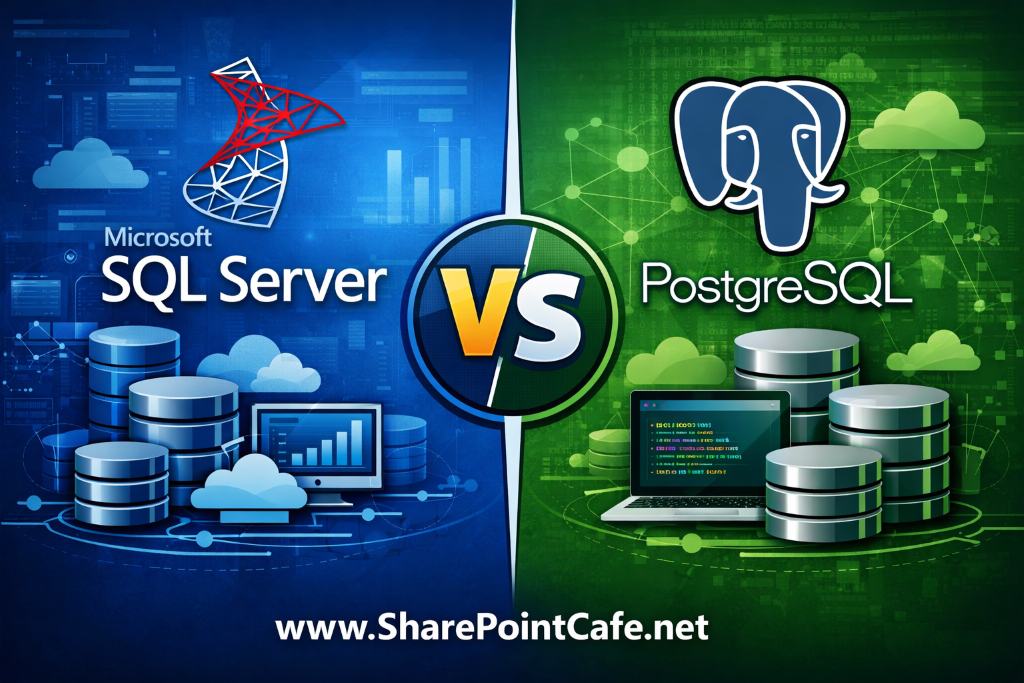
Choosing the right database is one of the most important decisions when building an application. A good database improves performance, security, and scalability. Two popular database systems are Microsoft SQL Server and PostgreSQL.
Many developers and companies compare these two databases when designing modern applications. Both are powerful relational database management systems (RDBMS). Both support advanced features and handle large amounts of data. However, they differ in licensing, performance, ecosystem, and flexibility.
In this article, we will explore SQL Server vs PostgreSQL in detail. We will discuss their architecture, features, performance, security, scalability, and real-world use cases. This guide will help you decide which database is best for your project.
What is SQL Server?
Microsoft developed SQL Server as an enterprise relational database system. It is part of the Microsoft ecosystem and works very well with technologies like .NET, Azure, and Power BI.
SQL Server stores structured data in tables and allows developers to query that data using T-SQL (Transact-SQL). It offers powerful tools for database management, reporting, and analytics.
Many enterprise companies choose SQL Server because it integrates smoothly with Microsoft products.
Key Features of SQL Server
- Advanced data security
- Built-in business intelligence tools
- High availability features
- Excellent integration with Microsoft tools
- Strong enterprise support
Popular SQL Server Tools
Some commonly used SQL Server tools include:
- SQL Server Management Studio (SSMS)
- SQL Server Integration Services (SSIS)
- SQL Server Reporting Services (SSRS)
- SQL Server Analysis Services (SSAS)
These tools make SQL Server very attractive for enterprise environments.
What is PostgreSQL?
PostgreSQL is a powerful open-source relational database system. Developers often call it Postgres. It is known for reliability, flexibility, and strong standards compliance.
PostgreSQL supports advanced features such as JSON, indexing methods, custom data types, and procedural languages. Because it is open source, many developers prefer it for modern cloud applications.
Companies like Instagram, Spotify, and Reddit use PostgreSQL for their systems.
Key Features of PostgreSQL
- Open-source and free
- Advanced indexing
- JSON and NoSQL capabilities
- Highly customizable
- Strong community support
PostgreSQL works well with modern development stacks such as Node.js, Python, Java, and Go.
SQL Server vs PostgreSQL: Key Differences
Let us compare the two databases across important aspects.
1. Licensing and Cost
Cost is often the first factor companies consider.
SQL Server
SQL Server is a commercial product. Microsoft offers different editions:
- Express (free but limited)
- Standard
- Enterprise
Enterprise editions can be expensive, especially for large organizations.
However, many companies accept the cost because SQL Server provides enterprise tools and official support.
PostgreSQL
PostgreSQL is completely free and open source. You do not need to pay license fees.
Companies can modify the database according to their needs. This flexibility makes PostgreSQL attractive for startups and cloud-based applications.
Verdict
If budget is important, PostgreSQL wins because it has no licensing cost.
2. Performance
Both databases offer strong performance. However, their strengths differ depending on the workload.
SQL Server Performance
SQL Server performs very well in:
- Large enterprise systems
- Transaction-heavy applications
- Business intelligence workloads
Microsoft continuously optimizes SQL Server for enterprise performance.
PostgreSQL Performance
PostgreSQL performs extremely well for:
- Complex queries
- Data analytics
- Large datasets
PostgreSQL also provides advanced query optimization.
Verdict
Both perform well. However:
- SQL Server often performs better in enterprise Microsoft environments.
- PostgreSQL often performs better with complex queries.
3. Platform Support
SQL Server
Originally, SQL Server only worked on Windows. Now Microsoft also supports:
- Linux
- Docker containers
- Azure cloud
However, the best experience still exists in the Microsoft ecosystem.
PostgreSQL
PostgreSQL runs on many operating systems:
- Windows
- Linux
- macOS
- Unix systems
It works well in open-source environments.
Verdict
PostgreSQL offers broader platform flexibility.
4. Security
Security is critical for modern applications.
SQL Server Security Features
SQL Server offers advanced enterprise security features such as:
- Transparent Data Encryption (TDE)
- Row-level security
- Dynamic data masking
- Always Encrypted
These features help organizations protect sensitive data.
PostgreSQL Security Features
PostgreSQL also provides strong security mechanisms:
- Role-based authentication
- SSL encryption
- Data access control
- Advanced permissions
Because it is open source, the community quickly fixes vulnerabilities.
Verdict
Both databases provide strong security. SQL Server may offer more built-in enterprise tools.
5. Extensibility and Customization
Customization is important for modern applications.
SQL Server
SQL Server provides many built-in tools, but customization options are limited compared to open-source databases.
Developers usually follow Microsoft’s ecosystem and design patterns.
PostgreSQL
PostgreSQL is highly customizable. Developers can:
- Create custom data types
- Write extensions
- Build custom functions
- Extend database capabilities
PostgreSQL supports many extensions such as:
- PostGIS (geospatial data)
- TimescaleDB (time-series data)
Verdict
PostgreSQL clearly wins in flexibility and extensibility.
6. Cloud Integration
Cloud computing has changed how databases work.
SQL Server in the Cloud
Microsoft provides Azure SQL Database and Azure SQL Managed Instance.
These services allow developers to run SQL Server in the cloud without managing infrastructure.
PostgreSQL in the Cloud
PostgreSQL works well with many cloud providers:
- AWS RDS
- Azure Database for PostgreSQL
- Google Cloud SQL
PostgreSQL integrates easily with container environments such as Kubernetes.
Verdict
Both databases work well in cloud environments.
7. Community and Support
SQL Server
SQL Server has strong enterprise support from Microsoft. Companies can purchase official support plans.
PostgreSQL
PostgreSQL has a large global open-source community. Thousands of developers contribute to its development.
Many organizations also provide commercial support.
Verdict
SQL Server offers strong enterprise support, while PostgreSQL benefits from open-source innovation.
When Should You Use SQL Server?
SQL Server is a great choice in these situations:
- Your application uses .NET or Microsoft technologies
- Your company already uses Microsoft infrastructure
- You need enterprise reporting tools
- You require official enterprise support
Large corporations often choose SQL Server for these reasons.
When Should You Use PostgreSQL?
PostgreSQL works best in these scenarios:
- You want a free open-source database
- Your application uses modern web technologies
- You need high customization
- You want strong support for JSON and advanced queries
Many startups and cloud applications prefer PostgreSQL.
Real-World Examples
SQL Server Users
Many enterprises use SQL Server, including:
- Large financial organizations
- Healthcare systems
- Government institutions
These industries require strong security and enterprise support.
PostgreSQL Users
Popular companies using PostgreSQL include:
- Spotify
These companies handle huge data volumes and complex queries.
Final Thoughts
Both SQL Server and PostgreSQL are excellent databases. They solve different problems and serve different ecosystems.
Choose SQL Server if you work heavily with Microsoft technologies and enterprise tools.
Choose PostgreSQL if you prefer open-source software, flexibility, and cloud-native development.
The best database always depends on your project requirements, budget, and technical stack.
Understanding the strengths of each system will help you make the right decision for your application.









Leave a Reply